
World Literature
Показаны все результаты (15)Сортировка: самые недавние
- Еврейская история
- Еврейская литература
- Еврейская традиция
- Законы и право
- Изучение иврита
- Искусство
- История
- Иудаизм
- Кабалла
- Кулинария
- Лекарственные растения и травы Израиля
- Медицинская литература
- Мемуары
- Новинки
- Политика и общество
- Поэзия
- Природа
- Психология
- Публицистика
- Путеводители
- Разное
- Слайдшоу
- Философия и эзотерика
- Фотоальбомы
- Электронные книги
-

The General Theory of Employment, Interest and Mon
Keynes John Maynard 418 ₪John Maynard Keynes (1883-1946) is perhaps the foremost economic thinker of the twentieth century. On economic theory, he ranks with Adam Smith and Karl Marx; and his impact on how economics was practiced, from the Great Depression to the 1970s, was unmatched.The General Theory of Employment, Interest and Money was first published in 1936. But its ideas had been forming for decades ? as a student at Cambridge, Keynes had written to a friend of his love for ‘Free Trade and free thought’. Keynes’s limpid style, concise prose, and vivid descriptions have helped to keep his ideas alive — as have the novelty and clarity, at times even the ambiguity, of his macroeconomic vision. He was troubled, above all, by high unemployment rates and large disparities in wealth and income. Only by curbing both, he thought, could individualism, ‘the most powerful instrument to better the future’, be safeguarded. The twenty-first century may yet prove him right.In The Economic Consequences of the Peace (1919), Keynes elegantly and acutely exposes the folly of imposing austerity on a defeated and struggling nation.The General Theory of Employment, Interest and Money was voted as the academic book which has had the greatest impact on modern Britain, during Academic Book Week (23-28 January 2017).
-
Faust
418 ₪Goethe’s Faust is a classic of European literature. Based on the fable of the man who traded his soul for superhuman powers and knowledge, it became the life’s work of Germany’s greatest poet. Beginning with an intriguing wager between God and Satan, it charts the life of a deeply flawed individual, his struggle against the nihilism of his diabolical companion Mephistopheles. Part One presents Faust’s pact with the Devil and the harrowing tragedy of his love affair with the young Gretchen. Part Two shows Faust’s experience in the world of public affairs, including his encounter with Helen of Troy, the emblem of classical beauty and culture. The whole is a symbolic and panoramic commentary on the human condition and on modern European history and civilisation. This new translation of both parts of Faust preserves the poetic character of the original, its tragic pathos and hilarious comedy. In addition, John Williams has translated the Urfaust, a fascinating glimpse into the young Goethe’s imagination, and a selection from the draft scenarios for the Walpurgis Night witches’ sabbath — material so ribald and blasphemous that Goethe did not dare publish it.
-
Iliad and the Odyssey
Homer 303 ₪Hector bidding farewell to his wife and baby son, Odysseus bound to the mast listening to the Sirens, Penelope at the loom, Achilles dragging Hector’s body round the walls of Troy — scenes from Homer have been reportrayed in every generation. The questions about mortality and identity that Homer’s heroes ask, the bonds of love, respect and fellowship that motivate them, have gripped audiences for three millennia. Chapman’s Iliad and Odyssey are great English epic poems, but they are also two of the liveliest and readable translations of Homer. Chapman’s freshness makes the everyday world of nature and the craftsman as vivid as the battlefield and Mount Olympus. His poetry is driven by the excitement of the Renaissance discovery of classical civilisation as at once vital and distant, and is enriched by the perspectives of humanist thought.
-
Nicomachean Ethics
Aristotle 418 ₪Aristotle (384-322BC) is the philosopher who has most influence on the development of western culture, writing on a wide variety of subjects including the natural sciences as well as the more strictly philosophical topics of logic, metaphysics and ethics. To the poet Dante, he was simply ‘the master of those who know’.The Ethics contains his views on what makes a good human life. While the work continues to stimulate and challenge modern philosophers, the general course of the argument is easily accessible to the non-specialist. Both as a key influence in the history of ideas and as a work containing unique insights into the human condition, this is a book that simply demands to be read.
-
Decline and Fall of the Roman Empire
Gibbon E. 418 ₪Gibbon’s Decline and Fall of the Roman Empire, published between 1776 and 1788, is the undisputed masterpiece of English historical writing which can only perish with the language itself. Its length alone is a measure of its monumental quality: seventy-one chapters, of which twenty-eight appear in full in this edition.With style, learning and wit, Gibbon takes the reader through the history of Europe from the second century AD to the fall of Constantinople in 1453 — an enthralling account by ‘the greatest of the historians of the Enlightenment’.This edition includes Gibbon’s footnotes and quotations, here translated for the first time, together with brief explanatory comments, a precis of the chapters not included, 16 maps, a glossary, and a list of emperors.
-

Poems and Sonnets (Shakespeare)
Shakespeare William 278 ₪Shakespeare’s sonnets have an intensity of both feeling and meaning unmatched in English sonnet form. They divide into two parts; the first 126 sonnets are addressed to a fair youth for whom the poet has an obsessive love and the second chronicles his love for the notorious ‘Dark Lady’.In addition to the sonnets, this volume includes Shakespeare’s two lengthy narrative poems on classical themes, The Rape of Lucrece which looks forward to the dark imagery of Macbeth, and Venus and Adonis which mixes ribaldry and tragedy in unique Shakespearean manner. The Phoenix and the Turtle is a beautiful metaphysical and allegorical short elegy, and takes its place with Shakespeare’s better-known poetry.
-
Human, All Too Human & Beyond Good and Evil
Nietzsche Friedrich Wilhelm 468 ₪Human, All Too Human (1878) marks the point where Nietzsche abandons German romanticism for the French Enlightenment. At a moment of crisis in his life (no longer a friend of Richard Wagner, forced to leave academic life through ill health), he sets out his views in a scintillating and bewildering series of aphorisms which contain the seeds of his later philosophy (e.g. the will to power, the need to transcend conventional Christian morality). The result is one of the cornerstones of his life’s work. It well deserves its subtitle ‘A Book for Free Spirits’, and its original dedication to Voltaire, whose project of radical enlightenment here finds a new champion. Beyond Good and Evil (1886) is a scathing and powerful critique of philosophy, religion and science. Here Nietzsche presents us with problems and challenges that are as troubling as they are inspiring, while at the same time outlining the virtues, ideas, and practices which will characterise the philosophy of the future. Relentless, energetic, tirelessly probing, he both determines that philosophy’s agenda and is himself the embodiment of the type of thought he wants to foster.»Человеческое, слишком человеческое» знаменует собой момент, когда Ницше отказывается от немецкого романтизма в пользу французского просвещения. В момент кризиса в своей жизни он излагает свои взгляды в блестящей и сбивающей с толку серии афоризмов, которые содержат семена его более поздней философии.»По ту сторону добра и зла» — это язвительная и мощная критика философии, религии и науки. Здесь Ницше знакомит нас с проблемами и вызовами, которые столь же беспокоят, сколь и вдохновляют, и в то же время обрисовывает в общих чертах добродетели, идеи и практики, которые будут характеризовать философию будущего. Неутомимый, энергичный, неустанно исследующий, он одновременно определяет повестку дня этой философии и сам является воплощением того типа мышления, который он хочет развивать.Книга на английском языке.
-
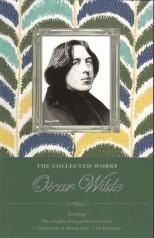
Collected Works of Oscar Wilde (TPB)
Уайльд Оскар 548 ₪Книга полностью на английском языке.A collection of Oscar Wildess many varied works. These include the tender fairy stories he wrote for his children, his novels, many of which shocked and outraged many readers of his day, plays which were enormously successful and continue to be so, and poems and essays.
-
Art of War & The Book of Lord Shang
Sun Tzu / Shang 281 ₪Translated by Yuan Shibing and J.J.L.Duyvendak. With introductions by Robert Wilkinson. The two political classics in this book are the product of a time of intense turmoil in Chinese history. Dating from the Period of the Warring States (403-221BC), they anticipate Machiavelli’s The Prince by nearly 2000 years. The Art of War is the best known of a considerable body of Chinese works on the subject. It analyses the nature of war, and reveals how victory may be ensured. The Book of Lord Shang is a political treatise for the instruction of rulers. These texts are anything but armchair strategy or ivory-tower speculation. They are serious, urgent and practical responses to the desperate situations in which they were written. They have been immensely influential both inside and outside China.
-
Seven Pillars of Wisdom. Семь столпов мудрости
Lawrence T. E. 211 ₪As Angus Calder states in his introduction to this edition, ‘Seven Pillars of Wisdom is one of the major statements about the fighting experience of the First World War’. Lawrence’s younger brothers, Frank and Will, had been killed on the Western Front in 1915. Seven Pillars of Wisdom, written between 1919 and 1926, tells of the vastly different campaign against the Turks in the Middle East — one which encompasses gross acts of cruelty and revenge and ends in a welter of stink and corpses in the disgusting ‘hospital’ in Damascus. Seven Pillars of Wisdom is no Boys Own Paper tale of Imperial triumph, but a complex work of high literary aspiration which stands in the tradition of Melville and Dostoevsky, and alongside the writings of Yeats, Eliot and Joyce.
-
Republic Plato
Plato 281 ₪The ideas of Plato (c429-347BC) have influenced Western philosophers for over two thousand years. Such is his importance that the twentieth-century philosopher A.N. Whitehead described all subsequent developments within the subject as foot-notes to Plato’s work. Beyond philosophy, he has exerted a major influence on the development of Western literature, politics and theology.The Republic deals with the great range of Plato’s thought, but is particularly concerned with what makes a well-balanced society and individual. It combines argument and myth to advocate a life organized by reason rather than dominated by desires and appetites. Regarded by some as the foundation document of totalitarianism, by others as a call to develop the full potential of humanity, the Republic remains a challenging and intensely exciting work.
-
The Descent of Man
Darwin Ch. 235 ₪In The Descent of Man Darwin addresses many of the issues raised by his notorious Origin of Species: finding in the traits and instincts of animals the origins of the mental abilities of humans, of language, of our social structures and our moral capacities, he attempts to show that there is no clear dividing line between animals and humans. Most importantly, he accounts for what Victorians called the ‘races’ of mankind by means of what he calls sexual selection. This book presents a full explanation of Darwin’s ideas about sexual selection, including his belief that many important characteristics of human beings and animals have emerged in response to competition for mates.This was a controversial work. Yet Darwin tried hard to avoid being branded as a radical revolutionary. He is steeped in Victorian sensibilities regarding gender and cultural differences: he sees human civilization as a move from barbarous savagery to modern gentlefolk, and women as more emotional and less intellectual than men, thus providing a biological basis for the social assumptions and prejudices of the day. The Descent of Man played a major role in the emergence of social Darwinism.This complete version of the first edition gives the modern reader an unparalleled opportunity to engage directly with Darwin’s proposals, launched in the midst of continuing controversy over On the Origin of Species.Janet Browne is the author of the prize-winning biography, Charles Darwin: Voyaging and Charles Darwin: The Power of Place.
-
Prophet
Gibran 281 ₪The Prophet represents the acme of Kahlil Gibran’s achievement. Writing in English, Gibran adopted the tone and cadence of King James I’s Bible, fusing his personalised Christian philosophy with a spirit and oriental wisdom that derives from the richly mixed influences of his native Lebanon. His language has a breath-taking beauty.Before returning to his birthplace, Almustafa, the ‘prophet’, is asked for guidance by the people of Orphalese. His words, redolent with love and understanding, call for universal unity, and affirm Gibran’s certainty of the correlated nature of all existence, and of reincarnation.The Prophet has never lost its immediate appeal and has become a ubiquitous touchstone of spiritual literature.
-
Voyage of the Beagle. Путешеств.на корабле «Бигль»
Darwin Charles 161 ₪With an Introduction by David Amigoni. Charles Darwin’s travels around the world as an independent naturalist on HMS Beagle between 1831 and 1836 impressed upon him a sense of the natural world’s beauty and sublimity which language could barely capture. Words, he said, were inadequate to convey to those who have not visited the inter-tropical regions, the sensation of delight which the mind experiences’. Yet in a travel journal which takes the reader from the coasts and interiors of South America to South Sea Islands, Darwin’s descriptive powers are constantly challenged, but never once overcome. In addition, The Voyage of the Beagle displays Darwin’s powerful, speculative mind at work, posing searching questions about the complex relation between the Earth’s structure, animal forms, anthropology and the origins of life itself.
-
Wealth of Nations.
Smith, Adam 468 ₪Adam Smith (1723-1790) was one of the brightest stars of the eighteenth-century Scottish Enlightenment. An Inquiry into the Nature and Causes of the Wealth of Nations was his most important book. First published in London in March 1776, it had been eagerly anticipated by Smith’s contemporaries and became an immediate bestseller. That edition sold out quickly and others followed. Today, Smith’s Wealth of Nations rightfully claims a place in the Western intellectual canon.It is the first book of modern political economy, and still provides the foundation for the study of that discipline.But it is much more than that. Along with important discussions of economics and political theory, Smith mixed plain common sense with large measures of history, philosophy, psychology, sociology, and much else. Few texts remind us so clearly that the Enlightenment was very much a lived experience, a concern with improving the human condition in practical ways for real people. A masterpiece by any measure, Wealth of Nations remains a classic of world literature to be usefully enjoyed by readers today.